
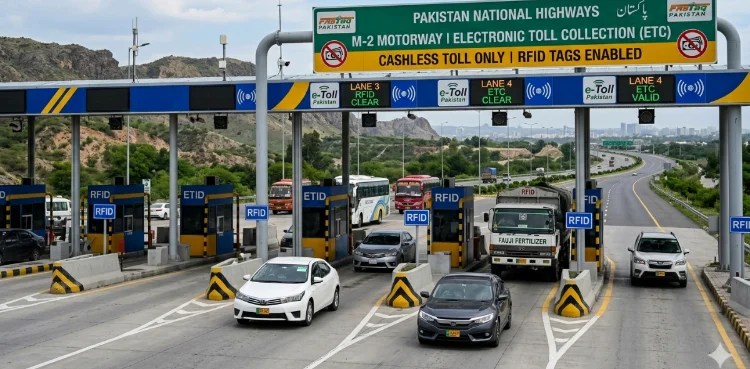
The federal government is planning to introduce a fully cashless toll collection system across major motorways in Pakistan as part of its broader strategy to accelerate digital payments and modernize transportation infrastructure.
The initiative aims to replace traditional cash-based toll booths with electronic payment mechanisms, allowing motorists to pay toll charges through digital channels. Officials believe the move will help reduce congestion at toll plazas, improve traffic flow, and enhance operational efficiency on the country’s motorway network.
Under the proposed system, commuters will be able to use digital payment methods such as prepaid accounts, electronic tags, mobile wallets, and banking platforms to complete toll transactions without the need for cash. The transition is expected to support the government’s wider vision of promoting a cashless economy and increasing financial inclusion.
Authorities say the project will also improve transparency in toll revenue collection while reducing the administrative costs associated with handling cash. Automated toll collection systems are widely used around the world and have proven effective in minimizing delays and improving the travel experience for motorists.
READ MORE: Honor’s Upcoming Smartphone May Feature One of the Largest Batteries Ever Seen in a Flagship Device
The plan is expected to be implemented in phases, beginning with major motorway corridors before expanding to other highways and road networks. Relevant agencies are currently working on the technological and operational framework required for nationwide deployment.
Transportation experts have welcomed the proposal, noting that digital toll collection can significantly reduce waiting times at toll plazas, lower fuel consumption caused by traffic queues, and improve overall road network efficiency.
The initiative forms part of the government’s ongoing efforts to digitize public services and integrate modern technology into key sectors of the economy. Further details regarding implementation timelines, payment options, and registration procedures are expected to be announced in the coming months.