

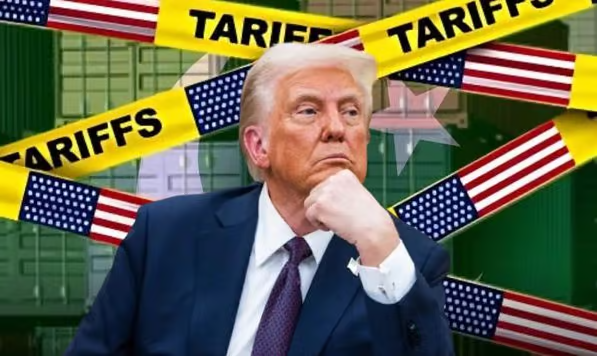
A U.S. federal court has delivered a major blow to former President Donald Trump’s trade agenda by halting wide-ranging tariffs, citing the lack of necessary approval from Congress.
The U.S. Court of International Trade ruled that the sweeping tariffs—part of Trump’s broader strategy to reduce trade deficits and shield domestic industries—overstepped executive authority. While some tariffs justified on national security grounds remain intact, the court’s decision significantly curtails the president’s ability to unilaterally impose import duties without legislative backing.
The court emphasized that only Congress holds the constitutional power to regulate international commerce. It ruled that Trump did not have unilateral authority under the emergency powers he cited to levy tariffs against nearly every foreign nation. This includes tariffs previously imposed on China, Mexico, and Canada, which were framed as tools to combat illegal immigration and drug trafficking.
READ MORE:
Pakistan Grants First Blockchain-Based HPC License to Higgs Computing
In response, the Trump administration promptly filed an appeal. A final decision is now expected from the U.S. Supreme Court.
Several small businesses and states affected by the tariffs supported the ruling, arguing that trade policies must adhere to legal frameworks rather than executive discretion. The White House, however, criticized the court’s stance, stating, “It is not for unelected judges to decide how to properly address a national emergency,” reaffirming the administration’s commitment to “America First” principles.
Since the announcement of these tariffs in April, global markets have faced significant volatility. However, following the court’s decision, Asian stock markets rallied and U.S. stock futures rose, indicating investor optimism over eased trade tensions.