

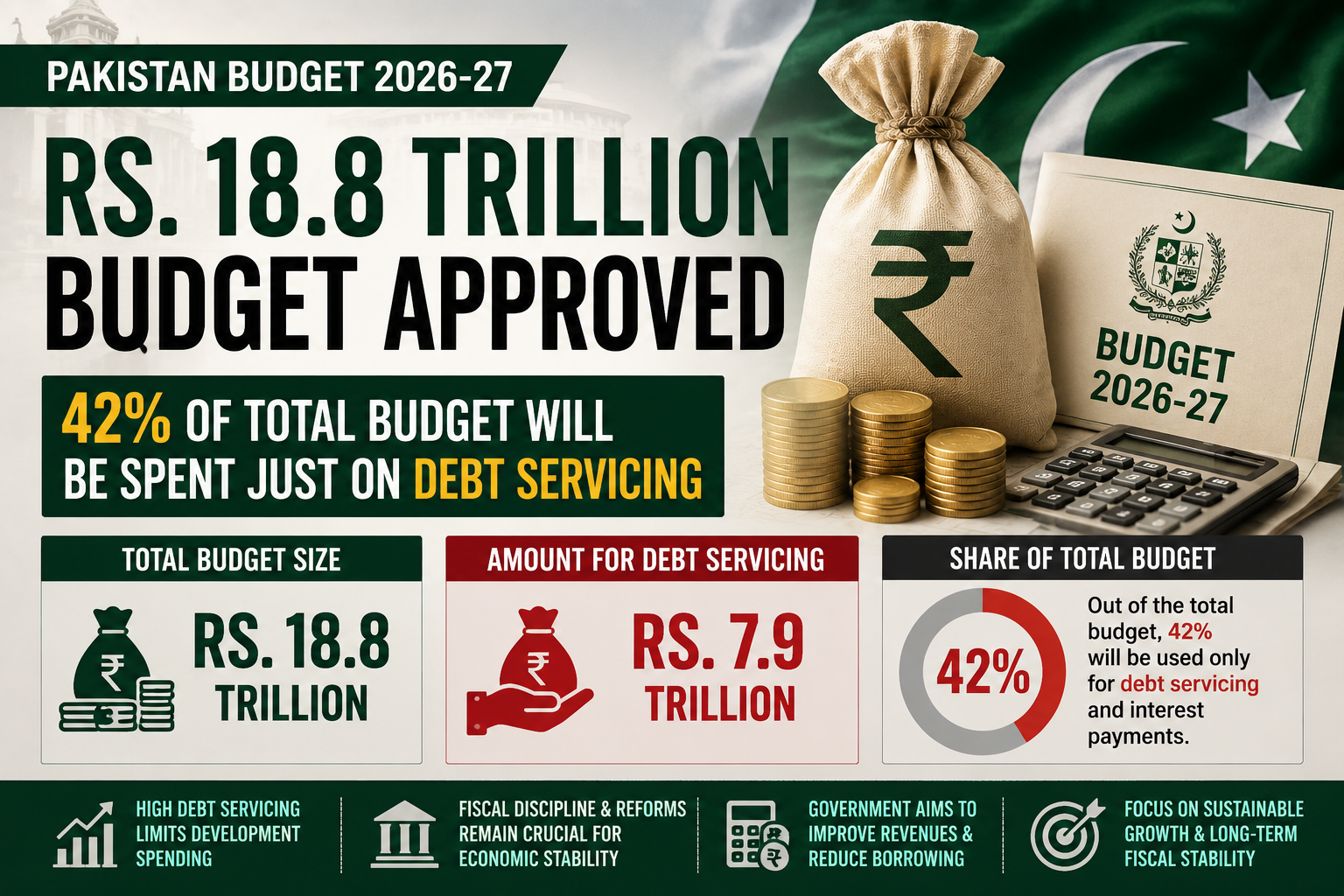
Pakistan’s FY2026-27 Budget has been unveiled with a total outlay of approximately Rs18.8 trillion, highlighting the country’s ongoing fiscal challenges. A significant portion of the budget—around 42 percent—has been earmarked for debt servicing, underscoring the heavy burden that public debt continues to place on the national economy. The latest budget reflects the government’s efforts to maintain fiscal discipline while meeting commitments under economic reform programs.
Debt Servicing Remains the Largest Expense
The most striking feature of the new budget is the allocation of roughly Rs7.8 trillion for debt servicing. This means that more than four out of every ten rupees the federal government plans to spend during the upcoming fiscal year will go toward paying interest and servicing existing debt obligations.
Despite improvements in economic indicators and inflation control efforts, Pakistan’s growing debt stock continues to limit fiscal flexibility. The government remains obligated to allocate a substantial share of revenues to debt repayments before addressing development priorities, public services, and infrastructure needs.
Fiscal Pressures Continue
The federal government has proposed the budget while balancing commitments to international lenders, including the IMF, and managing domestic economic challenges. Authorities have set ambitious revenue targets and are expected to rely heavily on tax collection measures to meet fiscal objectives.
Economic managers argue that maintaining fiscal discipline is essential for sustaining macroeconomic stability and preserving investor confidence. However, the high cost of debt servicing leaves limited room for large-scale development spending and social sector investments.
READ MORE: Cement and Power Sectors to Receive Major Relief in Pakistan Budget 2026-27
Impact on Development Spending
With debt repayments consuming such a large share of available resources, development allocations remain under pressure. Analysts note that infrastructure projects, education initiatives, healthcare programs, and other growth-oriented expenditures often face constraints when debt obligations dominate federal spending.
The government has nevertheless attempted to preserve funding for critical development priorities while pursuing fiscal consolidation. Policymakers hope that economic reforms and improved revenue generation will gradually create more fiscal space in future budgets.
Growing Debt Burden Raises Concerns
Official projections indicate that debt servicing costs will remain elevated in the coming years. Pakistan’s total public debt and external liabilities continue to represent a major challenge for long-term fiscal sustainability. Analysts believe that stronger economic growth, broader tax reforms, and improved revenue collection will be necessary to reduce dependence on borrowing and ease the debt burden over time.
Looking Ahead
The FY2026-27 budget reflects the difficult balancing act facing Pakistan’s policymakers. While the government seeks to support economic growth and provide relief to citizens, the overwhelming share of resources allocated to debt servicing highlights the urgency of structural reforms aimed at reducing borrowing costs and strengthening public finances. As the new fiscal year begins, managing debt while promoting sustainable growth will remain one of the country’s most important economic challenges.