
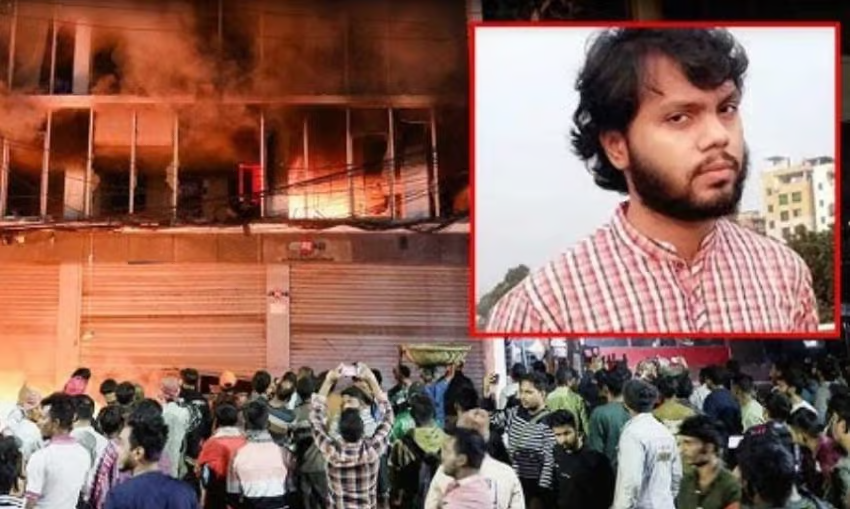
Bangladesh has descended into unrest following the killing of Sharif Osman Hadi, a prominent youth leader whose activism played a significant role in the downfall of former Prime Minister Sheikh Hasina Wajed’s government. His death has triggered widespread protests, arson, and attacks on media organizations in the capital, forcing the interim administration to declare a day of national mourning.
Hadi was shot in Dhaka last week as he was leaving a mosque. Witnesses reported that masked gunmen opened fire before escaping. He was critically injured and taken to a public hospital, later transferred to a private medical facility, and eventually airlifted to Singapore for advanced treatment. Despite prolonged medical efforts, he succumbed to his injuries on Thursday.
The killing took place just a day after the interim government announced the schedule for general elections—elections Hadi had intended to contest as an independent candidate. This timing has intensified speculation about political motives behind the assassination.
Public anger had been building since the attack, but tensions boiled over after confirmation of Hadi’s death. Large crowds poured onto the streets of Dhaka, chanting slogans and confronting law enforcement. The demonstrations quickly turned violent, with protesters attacking media offices, including the headquarters of a major national newspaper, and setting parts of buildings ablaze.
READ MORE: PIA Warns Travelers of Possible Delays as Winter Fog Affects Flights
Who Was Osman Hadi?
Osman Hadi rose to prominence as a leading figure of the “Inqilab Mancha” student movement. He was known for his outspoken anti-India views and fierce criticism of the Awami League. At the time, Sheikh Hasina was living in self-imposed exile in India.
Prior to his death, Hadi had repeatedly warned that his life was in danger. He accused Awami League supporters of threatening him and shared alarming claims on social media about receiving threats from dozens of local and foreign phone numbers, including threats against his family and home.
Hadi’s assassination has deepened fears that forces are attempting to sabotage Bangladesh’s already fragile democratic transition.
Originally from Barisal, Hadi had a unique academic background. He began his education at a madrasa, earning a degree in religious studies, before later completing a Political Science degree at the University of Dhaka. At the time of his death, he was serving as a lecturer at a private university.
He gained nationwide attention during last year’s mass protests against Sheikh Hasina’s rule, delivering fiery speeches and taking part in demonstrations at the historic Dhanmondi residence of Sheikh Mujibur Rahman.
Political leaders across the country have demanded immediate justice. Interim government head and Nobel laureate Dr. Muhammad Yunus described Hadi’s death as an “irreparable loss,” while also warning against further violence and chaos.
The current crisis follows last year’s dramatic political upheaval, when Sheikh Hasina fled to India after weeks of deadly protests that ended her 15-year rule. Those protests resulted in the deaths of approximately 1,400 people. In November, Hasina was sentenced to death after being convicted of crimes against humanity for authorizing lethal force against demonstrators.