
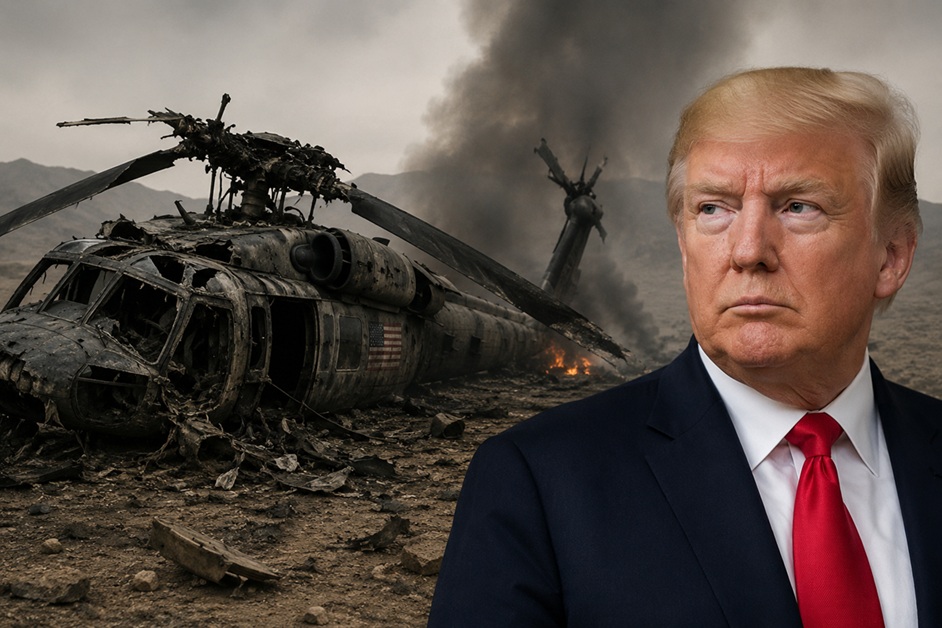
Iran shot down a United States Army Apache attack helicopter near the Strait of Hormuz on Monday, June 9, 2026, President Donald Trump confirmed. Both crew members were rescued safely in what the US military described as a first-of-its-kind operation involving an unmanned drone boat.
What Happened to the US Apache Helicopter?
A US Army AH-64 Apache helicopter went down while patrolling over the Strait of Hormuz, the strategically critical waterway that Iran has effectively closed to most shipping during its ongoing war with the United States and Israel. Two US officials confirmed the Apache was struck by an Iranian drone — with a separate source identifying it as an Iranian Shahed drone. Whether the strike was intentional or accidental remained under investigation.
US Central Command confirmed that an unmanned Navy drone boat, assigned to Task Force 59, successfully rescued both aviators from the water off the coast of Oman. Task Force 59 was established in 2021 as the US Navy’s first uncrewed, artificial intelligence-focused unit for maritime security operations in the Middle East.
Trump Blames Iran and Pledges Military Response
President Trump announced the incident on his Truth Social platform Tuesday afternoon, stating he had been briefed by the US military.
“The Iranians shot down one of our highly sophisticated Apache Helicopters while patrolling over the Strait of Hormuz. There were two pilots involved, both are safe and uninjured. Nevertheless, the United States must, of necessity, respond to this attack,” Trump wrote.
Speaking to reporters at John F. Kennedy International Airport, Trump added that a full report would be issued later in the day.
Iran’s Foreign Minister Responds
Iranian Foreign Minister Abbas Araghchi pushed back against Trump’s accusation in a post on X, stating that foreign military forces operating near Iranian territory “are at constant risk” due to their own errors, accidents, or potential crossfire.
“To reduce risk, best solution is for them to leave. We prefer language of diplomacy but speak other languages too,” Araghchi wrote.
A Region Already on Edge
The incident occurred just one day after Iran and Israel exchanged strikes in the most serious blow yet to the fragile ceasefire established on April 8, 2026. Iranian state television reported that Israeli attacks killed at least two members of Iran’s air-defense units.
Must Read:
Trump Says US-Iran Talks Still On Despite Reports of Suspension
The broader conflict has severely disrupted global energy markets. Before the war, the Strait of Hormuz carried roughly one-fifth of the world’s crude oil and liquefied natural gas. Iran’s blockade of most shipping through the strait — countered by a US blockade of Iranian ports — has driven up energy prices worldwide and put pressure on global food supplies.
US-Iran Nuclear Negotiations Continue
Despite the escalation, Trump expressed cautious optimism about ongoing nuclear talks with Iran just hours before confirming the helicopter shootdown.
“We have a good chance of signing a deal in two or three days,” Trump told reporters, though he offered no specific details. He has made similar predictions multiple times in the two months since the initial US-Iran ceasefire was agreed upon. “We’re very close to having a very, very good, strong, powerful deal,” the president said.
Any final agreement, Trump has maintained, must guarantee that Iran cannot develop a nuclear weapon.
Apache Helicopters’ Role in the Strait of Hormuz
AH-64 Apache helicopters have been a critical US military asset in the region, deployed to enforce the blockade on Iranian crude oil shipments and intercept Iranian drones. The United Arab Emirates has also used Apache helicopters to shoot down Iranian drones during the conflict.
The downing of the helicopter marks the latest in a series of aircraft losses in the region. In March 2026, a KC-135 Stratotanker crashed in western Iraq, killing all six crew members. Days earlier, three US F-15 fighter jets were mistakenly shot down by Kuwaiti air defenses, with all crew members ejecting safely. In early April, a covert rescue mission was launched inside Iran to recover the pilot of a downed F-15E Strike Eagle.