

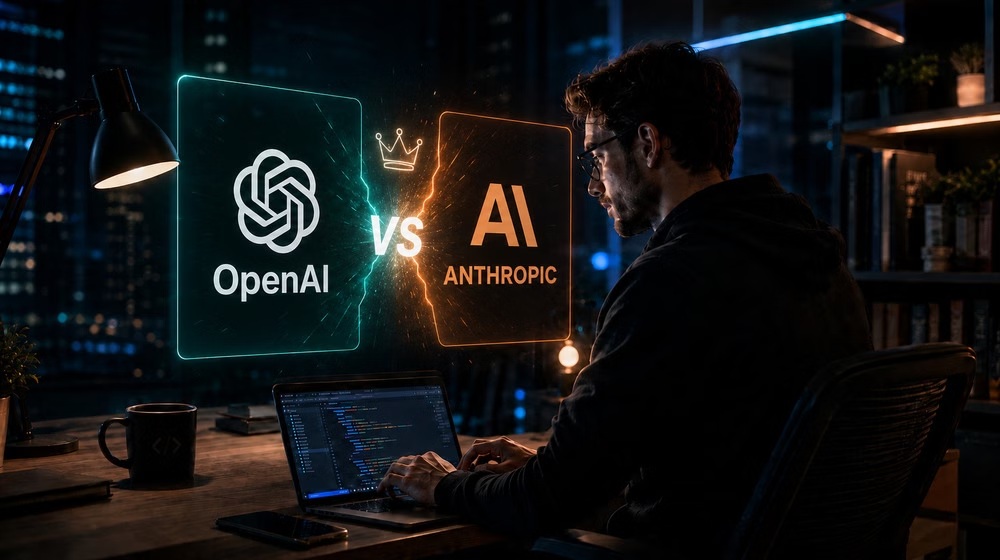
The rivalry between AI giants OpenAI and Anthropic is heating up as both companies aggressively roll out free perks and expanded access to attract developers and enterprise customers to their coding platforms.
The latest battle began when OpenAI CEO Sam Altman announced that companies signing up for Codex within the next 30 days would receive two months of free enterprise-level access. OpenAI also introduced migration tools designed to make switching from competing platforms easier for businesses and development teams.
Almost immediately after OpenAI’s announcement, Anthropic responded by increasing usage limits for Claude Code by 50 percent for Pro, Team, Max, and Enterprise users. The expanded limits will reportedly remain active until July 2026, signaling a direct challenge to OpenAI’s Codex push.
The growing competition highlights how important AI-powered coding assistants have become in the software development industry. Tools like Codex and Claude Code are now being widely used for code generation, debugging, automation, documentation, and software testing, turning developers into one of the most valuable customer groups in the AI market.
READ MORE: HEC Appoints NUST Rector to Lead Pakistan’s National AI and Robotics Vision
Industry analysts believe the “freebie war” is less about short-term profits and more about long-term ecosystem dominance. By offering generous free access and migration incentives, both companies hope developers will become deeply integrated into their platforms before the AI market fully matures.
The timing is particularly significant because enterprise adoption of AI tools is accelerating rapidly. Recent industry reports show that Anthropic has started gaining ground against OpenAI in workplace AI adoption, especially among software development teams and enterprise users.
OpenAI still maintains a massive consumer presence through ChatGPT, while Anthropic continues to position Claude as a strong alternative focused on coding, enterprise workflows, and AI safety. Both companies are also raising billions of dollars to expand infrastructure, develop more advanced models, and secure long-term market leadership in the global AI race.
The competition between the two firms is expected to intensify further as AI coding assistants become central to modern software development, potentially reshaping how programmers, startups, and large corporations build technology in the coming years.