

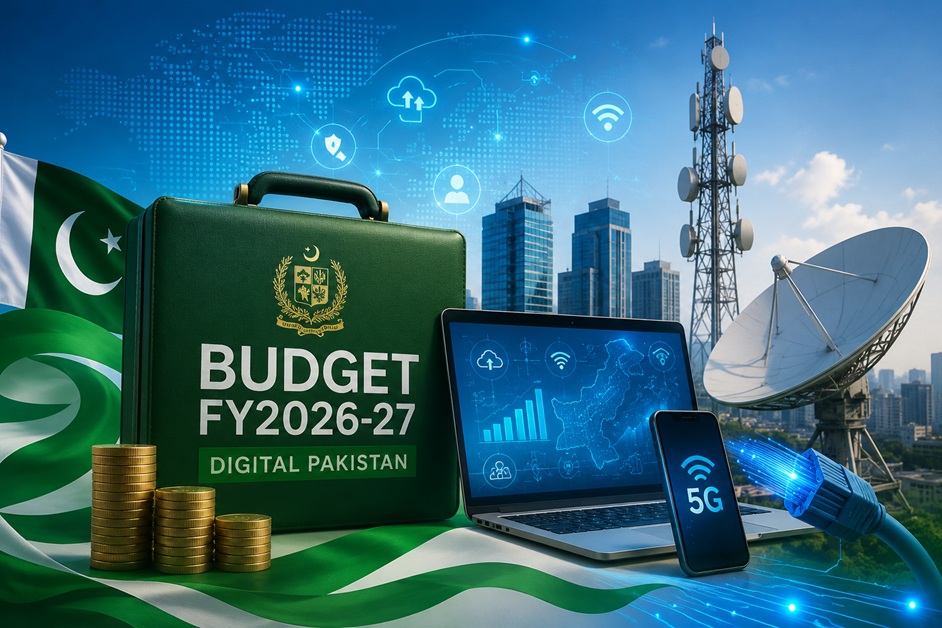
Pakistan Budget FY2026-27 Accelerates Digital Transformation with Major Incentives for IT, Telecom and Startups
The Federal Government has unveiled an ambitious budget for FY2026-27 aimed at accelerating Pakistan’s transition into a digitally driven and innovation-led economy. Presented by Finance Minister Senator Muhammad Aurangzeb on June 12, 2026, the Finance Bill introduces a range of policy reforms designed to strengthen the country’s technology ecosystem, encourage investment, reduce operational costs for businesses, and create a more competitive digital environment.
The budget reflects the government’s broader vision of positioning technology and innovation as key drivers of economic growth. With Pakistan’s information technology sector continuing its upward trajectory, policymakers have introduced measures intended to support exporters, startups, telecom operators, technology professionals, and digital infrastructure providers.
IT Exports Continue Strong Growth
One of the major highlights of the budget is the continued expansion of Pakistan’s IT industry. According to the Finance Minister, the country’s IT exports have reached approximately $4.5 billion during the current fiscal year, representing growth of more than 20 percent compared to the previous year.
The government believes that maintaining this momentum will require long-term policy consistency and a supportive business environment, which has been reflected in several key budgetary measures.
Long-Term Tax Relief for IT Exporters
To provide certainty and stability for technology businesses, the government has extended the concessionary tax rate of 0.25 percent on IT exports under Section 154A. The incentive was previously scheduled to expire on June 30, 2026, but will now remain in place through Tax Year 2029.
The extension is expected to benefit software houses, IT service providers, and technology exporters by ensuring predictable taxation and improving their ability to plan long-term investments and expansion strategies.
Significant Reduction in Foreign Payment Taxes
In a move welcomed by the technology industry, the government has reduced advance tax on foreign payments made through credit cards, debit cards, and prepaid cards from 5 percent to just 0.5 percent.
This substantial reduction will lower the cost of purchasing international software licenses, cloud computing services, digital tools, and Software-as-a-Service (SaaS) subscriptions. Freelancers, technology companies, startups, and digital entrepreneurs are expected to benefit from improved access to global platforms while facing significantly lower operational expenses.
The measure is also likely to support Pakistan’s growing digital workforce, which increasingly relies on international online services to conduct business and serve global clients.
Relief for Skilled Professionals and Businesses
The budget introduces additional support for salaried professionals by raising the income threshold for the highest 35 percent tax bracket from Rs. 4.1 million to Rs. 7 million annually. The associated surcharge has also been removed, providing meaningful tax relief for high-skilled workers and professionals employed in the technology sector.
Must Read:
Milk and Meat Prices Rise Sharply in Open Markets Across Pakistan
To further encourage digitization, the government has announced a 10 percent tax credit for businesses integrating with Federal Board of Revenue (FBR) systems. This initiative is expected to accelerate digital adoption while creating new business opportunities for software developers, IT consultants, and system integration providers.
Continued Support for Telecom Infrastructure
The FY2026-27 budget also emphasizes the importance of strengthening Pakistan’s digital infrastructure.
The government has maintained a zero percent customs duty on submarine cable landing station equipment, supporting investments in international connectivity and helping expand broadband networks, cloud computing capabilities, and data center infrastructure.
Similarly, the existing zero percent customs duty on smartphones remains unchanged, ensuring that smart devices remain accessible and affordable for consumers and businesses alike.
In another positive development, the government has abolished the Rs. 250 customs duty previously imposed on feature phones. The move is expected to improve affordability for entry-level users and promote wider access to mobile communication services, particularly in underserved and low-income communities.
The duty-free regime for raw materials used by local SIM card and smart card manufacturers has also been retained, supporting domestic production and industry growth.
Improved Cash Flow for Public Telecom Infrastructure
The budget introduces a specific exemption for the National Telecommunications Corporation (NTC) from Section 153 withholding tax requirements.
This measure is expected to improve the organization’s cash flow position and enhance its ability to invest more efficiently in telecommunications infrastructure projects that support government institutions and public sector digital services.
Major Boost for Startups and Venture Capital
Pakistan’s startup ecosystem has received some of the most notable incentives announced in the Finance Bill.
Under Clause 43F, startups have been exempted from Section 153 withholding tax. The reform addresses a long-standing concern among entrepreneurs by allowing startups to receive the full value of customer payments without facing delays associated with tax refund procedures.
The government has also restored tax pass-through treatment for venture capital funds under Clause 57(2), a move expected to improve investment activity and make Pakistan’s startup ecosystem more attractive to investors.
Further support comes through changes to the Super Tax structure. Companies generating less than Rs. 500 million in annual income will no longer be subject to Super Tax, while the rate for larger businesses has been reduced from 10 percent to 8 percent.
Industry observers believe these changes will encourage companies to reinvest more capital into expansion, talent development, innovation, and technology upgrades.
Encouraging Overseas Investment
In an effort to attract greater investment from overseas Pakistanis, the government has abolished the Capital Value Tax (CVT) on foreign movable and immovable assets owned by resident Pakistanis.
The decision signals a broader commitment to strengthening investment flows into Pakistan and leveraging diaspora capital to support economic development and entrepreneurship.
Government Reaffirms Commitment to Digital Pakistan
Federal Minister for IT and Telecom Shaza Khawaja described the budget as a significant milestone in Pakistan’s digital transformation journey. She emphasized that the reforms demonstrate the government’s commitment to building a modern, competitive, and future-ready digital economy.
According to the Ministry of IT and Telecom, the combined impact of the budgetary measures is expected to reduce business costs, improve tax certainty, strengthen digital infrastructure, attract investment, and support sustainable growth across the technology sector.
Outlook for the Technology Sector
The FY2026-27 budget represents one of the most comprehensive efforts in recent years to support Pakistan’s digital economy. By extending tax incentives, reducing operating expenses, strengthening infrastructure investment, supporting startups, and encouraging venture capital activity, the government has laid the groundwork for continued growth in technology exports, innovation, and employment.
If effectively implemented, these reforms could help position Pakistan as a more competitive regional technology hub while accelerating the country’s broader digital transformation agenda.