

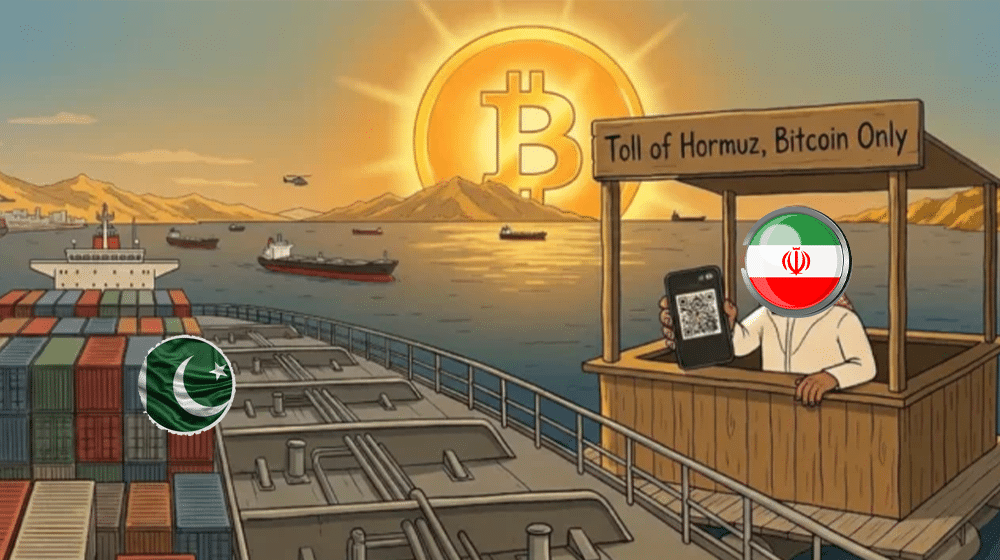
The possibility of Pakistan Iran Hormuz Bitcoin Payments has sparked global attention after reports suggested that ships heading toward Pakistan through the Strait of Hormuz may eventually face unconventional payment requirements amid escalating regional tensions.
The Strait of Hormuz is considered one of the world’s most strategically important maritime routes, handling nearly a fifth of global oil trade. Any disruption in the region immediately impacts international shipping, fuel prices, and global trade networks.
Recent discussions emerged following heightened geopolitical uncertainty involving Iran and growing concerns about maritime security in the Gulf region. Analysts have speculated that alternative payment mechanisms, including cryptocurrency such as Bitcoin, could potentially be explored by certain shipping operators if traditional banking channels face restrictions or sanctions-related complications.
While no official policy has been announced by Iranian authorities regarding mandatory Bitcoin payments for transit, the speculation reflects how digital currencies are increasingly being viewed as alternative financial tools during periods of economic sanctions and geopolitical instability.
READ MORE: Naqvi-Pezeshkian Tehran Meeting Focuses on Regional Stability and Bilateral Cooperation
Pakistan heavily relies on maritime trade routes passing through the Strait of Hormuz for energy imports, commercial goods, and international trade operations. Any additional transit costs, security fees, or payment restrictions could significantly affect shipping expenses and fuel prices within the country.
Cryptocurrency experts note that Bitcoin transactions can operate outside traditional banking systems, making them attractive in regions facing financial sanctions or cross-border payment limitations. However, volatility, regulatory uncertainty, and security concerns continue to limit widespread adoption for large-scale international trade operations. (coindesk.com)
The reports have also fueled debate over the growing intersection between geopolitics, global trade, and digital currencies. Some analysts believe future international shipping systems could increasingly integrate blockchain-based payments and decentralized financial technologies.
For now, the idea remains speculative, but the situation highlights how rising tensions in the Gulf region could accelerate discussions around alternative trade and payment mechanisms in global shipping industries.