

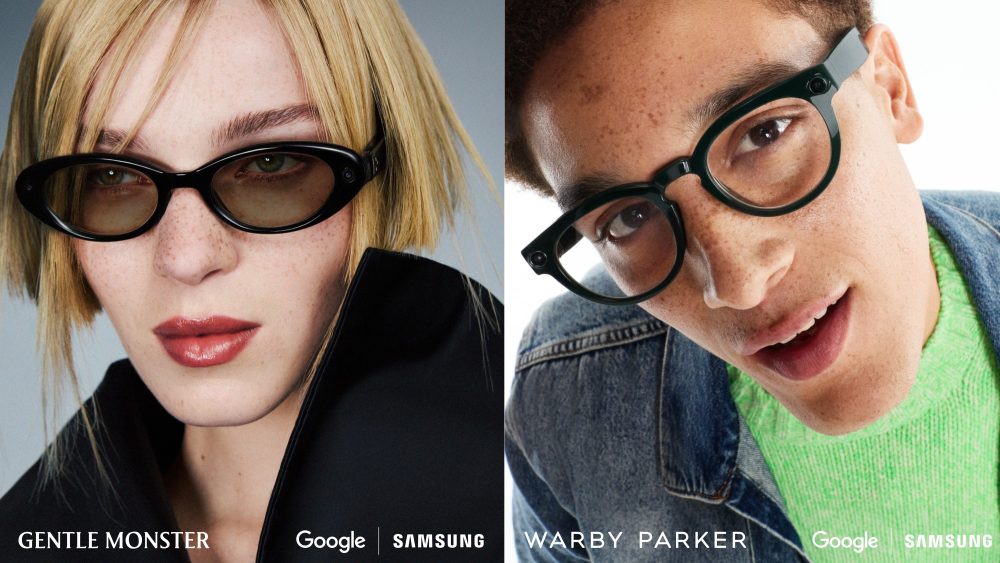
The new Samsung AI Smart Glasses have officially been unveiled in collaboration with Google, introducing advanced real-time translation capabilities and next-generation AI-powered wearable technology. The announcement marks a major step forward in the growing augmented reality and AI device market.
Samsung and Google showcased the smart glasses as part of their broader push into AI-driven wearable devices designed to blend digital experiences with everyday life. The glasses are expected to provide hands-free access to translation tools, navigation, notifications, live AI assistance, and contextual information directly within the user’s field of view.
One of the biggest highlights is the real-time translation feature powered by Google’s advanced AI language models. Users can reportedly view instant translated subtitles during live conversations, making communication across different languages faster and more natural. The feature could become especially useful for travelers, business professionals, and international collaboration.
The smart glasses are also expected to integrate tightly with Android smartphones, Google services, and Samsung’s ecosystem of connected devices. Reports suggest the wearable may support voice commands, AI-powered search, live transcription, and visual recognition features through onboard cameras and microphones.
Industry analysts believe the collaboration signals a renewed attempt by major tech companies to popularize augmented reality wearables after earlier smart glasses products struggled to achieve mainstream success. However, improvements in artificial intelligence, lightweight hardware, and battery efficiency are now making the technology more practical.
READ MORE: Microsoft Surface Laptops Get Major Upgrade With Intel Core Ultra Chips
The device is reportedly being developed under Google’s Android XR platform, which focuses on mixed reality and AI-powered wearable experiences. Qualcomm’s Snapdragon XR chips are also expected to power the glasses, enabling advanced processing for AR visuals and AI tasks.
Samsung has increasingly expanded its AI strategy across smartphones, wearables, home devices, and ecosystem products. The company’s partnership with Google reflects growing competition in the AI hardware market against rivals including Apple, Meta, OpenAI, and Chinese tech brands.
Experts believe AI smart glasses could become one of the next major categories in consumer technology if companies successfully balance privacy, battery life, comfort, and real-world usefulness. Real-time translation alone is being viewed as one of the most commercially valuable features for mainstream adoption.
Although Samsung and Google have not yet confirmed a full global release timeline, reports suggest the AI smart glasses may enter limited markets or developer programs before broader consumer availability.