
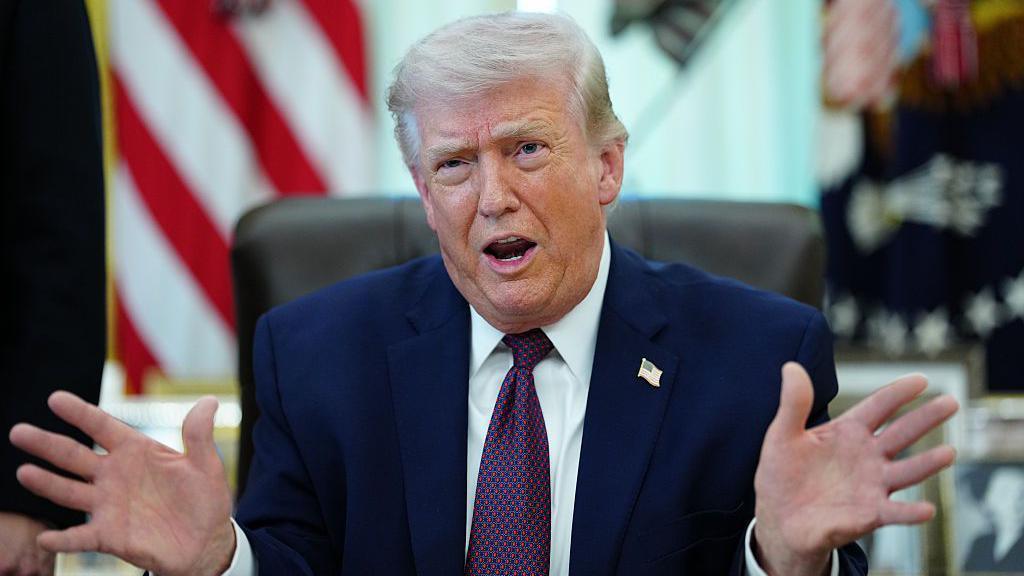
Donald Trump has ruled out the use of nuclear weapons in the ongoing conflict with Iran, emphasizing that the United States has already achieved its military objectives through conventional means. Speaking at the White House, Trump stated that nuclear weapons should never be used under any circumstances, warning that their deployment could devastate entire regions and trigger catastrophic global consequences.
He noted that US forces had significantly weakened Iran’s military capabilities, claiming its navy, air force, and air defense systems had largely been neutralized. However, he acknowledged that Iran may have attempted limited rearmament during the recent two-week ceasefire, adding that any such buildup could be swiftly eliminated if necessary. Despite this, Trump stressed that his priority is not a rushed agreement but a lasting and comprehensive peace deal that ensures long-term global security.
Meanwhile, Iran has taken steps to tighten its control over the Strait of Hormuz, a critical route for global energy supplies. Reports indicate that Tehran has granted certain “friendly” countries, including Russia, exemptions from potential transit fees as it considers imposing tariffs on shipping passing through the strait.
Tensions in the region have further escalated with Iran’s increased reliance on fast-attack boat swarms. These small, high-speed vessels have been used in recent operations to seize commercial ships, highlighting a shift toward asymmetric naval warfare. Despite earlier claims that Iran’s naval strength had been significantly degraded, these agile units continue to pose a serious threat to maritime security.
READ MORE: Man Robbed of $8,600 in Digital Currency Near Karachi Airport
Security analysts describe Iran’s strategy as a “layered threat system,” combining fast boats with missiles, drones, naval mines, and electronic warfare tools. This approach is designed to disrupt shipping routes, create uncertainty, and challenge larger naval forces, particularly in confined waterways like the Strait of Hormuz.
Although the US has warned that any hostile vessels approaching its naval blockade would be immediately destroyed, experts caution that small, fast-moving boats are far more difficult to detect and eliminate than traditional warships. Their speed and maneuverability make them ideal for hit-and-run operations, especially when deployed in coordinated groups.
However, these boats also have limitations. They are vulnerable to air strikes and are not equipped to engage directly with heavily armed warships. Environmental factors, such as rough sea conditions, can further reduce their operational effectiveness.
The renewed maritime tensions come as diplomatic efforts continue. In a separate development, Trump announced that Israel and Lebanon have agreed to extend their ceasefire by three weeks following high-level talks in Washington. He expressed optimism about hosting leaders from both nations for further discussions aimed at long-term stability.
Overall, the situation in the region remains highly volatile. While large-scale naval capabilities may have been diminished, Iran’s shift toward asymmetric tactics ensures that the threat to global shipping—and broader geopolitical stability—continues to evolve.