

Origins Under the Soviet Union
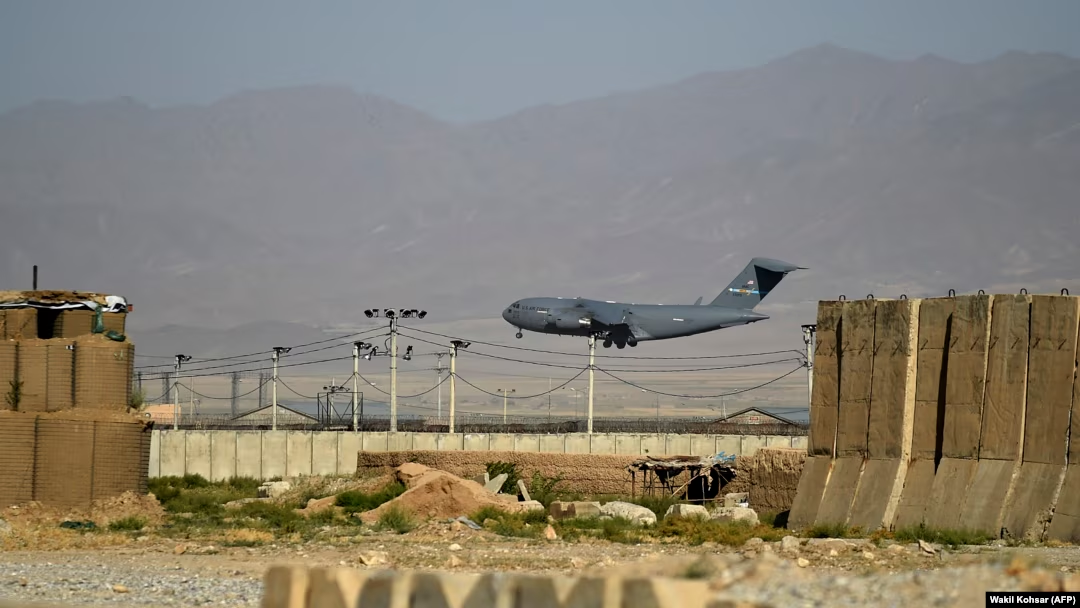
Bagram Air Base, located near Kabul in the heart of Afghanistan, is counted among the largest military installations of the modern era. It was originally built by the Soviet Union during the 1980s to secure its grip on Afghanistan. The Soviets believed control of the skies was essential to dominate the land, so they constructed this massive base north of Kabul.
Spread over 20 square kilometers (around 5,000 acres), the base featured two runways:
- A 3.5 km-long runway capable of handling giant aircraft such as B-52s and C-5s.
- A shorter runway primarily used by the Soviets.
Its infrastructure included:
- Large stockpiles of weapons and ammunition.
- Modern workshops for aircraft and vehicles.
- Afghanistan’s largest military hospital, with hundreds of beds.
- Intelligence and drone control centers.
- Residential facilities for over 20,000 troops and staff.
- CIA-operated secret prisons.
- Multiple helipads and command posts.
When the Soviets withdrew, the base fell dormant—waiting, like a “sleeping giant,” for its next owner.
READ MORE: Punjab Govt Announces Semester Fee Waiver for University Students in Flood-Affected Districts
America Takes Control
After the 9/11 attacks in 2001, the U.S. invaded Afghanistan, and the Pentagon found Bagram to be the perfect stronghold: already built, close to Kabul, and expandable.
The U.S. rebuilt and modernized the base, turning it into:
- A hub for CIA operations and drone warfare.
- A high-tech command center with advanced surveillance and communication systems.
- The main headquarters of America’s military dominance in Afghanistan.
The Dark Side of Bagram
Bagram was not just a military base; it became infamous for its secret detention facilities. The most notorious was the “Black Jail”, where hundreds of prisoners were held without trial and subjected to torture. This reputation earned Bagram the title of the “Guantanamo of the East.”
Why Was Bagram So Important?
From Bagram, the U.S. could monitor multiple strategic rivals simultaneously:
- Iran
- Pakistan
- China
- Russia
Thus, the base was not only vital for Afghanistan but also for influencing the strategic balance across half of Asia.
America’s Midnight Exit
In July 2021, U.S. forces abandoned Bagram in secrecy, leaving in the middle of the night without informing the Afghan government. Within hours, the Taliban seized the base—an image that symbolized the collapse of American supremacy in Afghanistan.
America’s Desire to Return
Even after the humiliating withdrawal, former U.S. President Donald Trump and other American leaders have expressed the wish to regain Bagram, recognizing it as the “key to Central Asia.” However, the Taliban have firmly rejected such proposals, fueling a new era of “shadow conflict.”
What Remains at Bagram Today?
- Dozens of military buildings and stockpiles of weapons.
- Reports suggest advanced U.S. surveillance equipment was left behind.
- Some sources believe China and other countries are studying the remnants for their own strategic purposes.
Conclusion
Bagram is more than a military base—it is:
- A relic of Soviet defeat.
- A graveyard of American arrogance.
- A potential trigger point for a new “Cold War.”
The truth is simple: whoever controls Bagram controls not just Afghanistan, but wields influence over much of the Eastern world.