
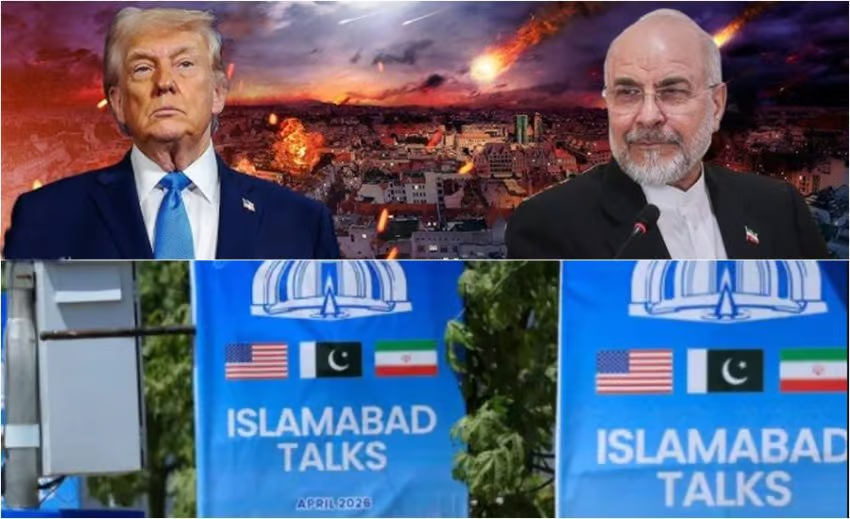
Former U.S. President Donald Trump appears to be buying time on the fragile Iran ceasefire, as Pakistan gears up to host a second round of high-stakes negotiations, widely referred to as Islamabad Talks 2.0.
Pakistan has once again emerged as a key diplomatic mediator between Washington and Tehran, with officials expressing cautious optimism that Iran may still agree to participate in the upcoming talks. However, uncertainty remains high as both sides continue to hold firm on major demands.
The previous round of negotiations in Islamabad failed to produce a breakthrough, largely due to deep disagreements over Iran’s nuclear program, uranium stockpiles, and control over the strategic Strait of Hormuz.
READ MORE: Pakistan Extends Airspace Ban on Indian Flights Until May 2026
Despite the stalled progress, the United States is pushing for renewed dialogue and has signaled readiness to send a delegation to Pakistan. Meanwhile, Iran has indicated that it may only return to the table if key conditions—such as easing sanctions and lifting the naval blockade—are addressed.
Tensions remain elevated as the ceasefire nears its expiration, with both sides accusing each other of violations. The ongoing U.S. blockade of Iranian ports and disputes over nuclear restrictions continue to act as major obstacles to any potential agreement.
Pakistan’s role has become increasingly significant, positioning itself as a crucial bridge in efforts to prevent further escalation. With global markets and regional stability at stake, the outcome of the upcoming talks could prove decisive in determining whether diplomacy prevails or conflict intensifies.