

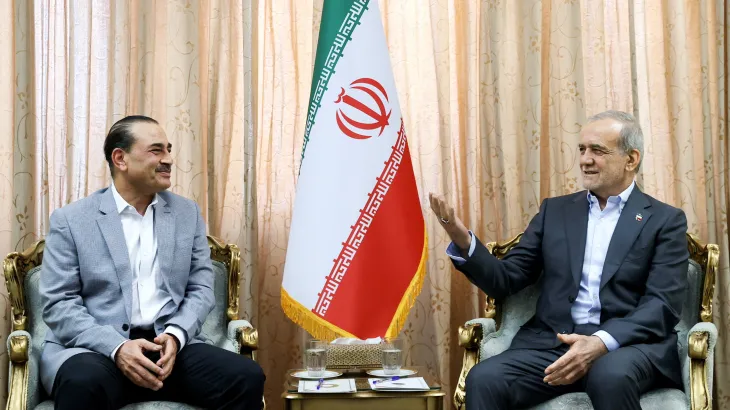
The latest round of Field Marshal Iran Peace Talks concluded after Pakistan’s Chief of Army Staff, Field Marshal Syed Asim Munir, departed Tehran following a series of high-level diplomatic meetings focused on regional peace and de-escalation efforts.
According to the Inter-Services Public Relations (ISPR), the visit was described as short but significant, highlighting Pakistan’s continued diplomatic engagement in ongoing efforts to facilitate dialogue between Iran and the United States.
During his visit, Field Marshal Asim Munir reportedly held meetings with senior Iranian leadership, including political, military, and diplomatic officials. Discussions focused on regional stability, the future of ongoing peace negotiations, and measures aimed at preventing further escalation in the Middle East.
Pakistan has increasingly emerged as an active mediator in recent US-Iran diplomatic efforts, particularly following the fragile ceasefire and earlier Islamabad peace talks aimed at reducing tensions in the region.
Reports suggest the Tehran meetings also addressed issues surrounding the Strait of Hormuz, sanctions relief, and broader regional security concerns that continue to complicate negotiations between Washington and Tehran.
READ MORE: Trump Iran Peace Deal Chances Stand at ‘50/50’ as War Threat Looms
International observers believe Pakistan’s diplomatic role has become increasingly important due to its strategic relations with Iran, Gulf countries, China, and the United States. Analysts say Islamabad is attempting to position itself as a neutral facilitator focused on regional stability and conflict prevention.
Recent mediation efforts have involved multiple regional stakeholders, including Qatar, Saudi Arabia, Turkey, and the UAE, all of whom are closely monitoring developments due to the potential economic and security impact of renewed conflict in the Gulf region.
While no formal breakthrough was officially announced following the Tehran talks, diplomatic sources indicate discussions remain ongoing and additional negotiations may continue in the coming days.
The evolving situation is being closely watched globally due to its potential impact on oil markets, regional security, and international trade routes, particularly around the strategically critical Strait of Hormuz.