

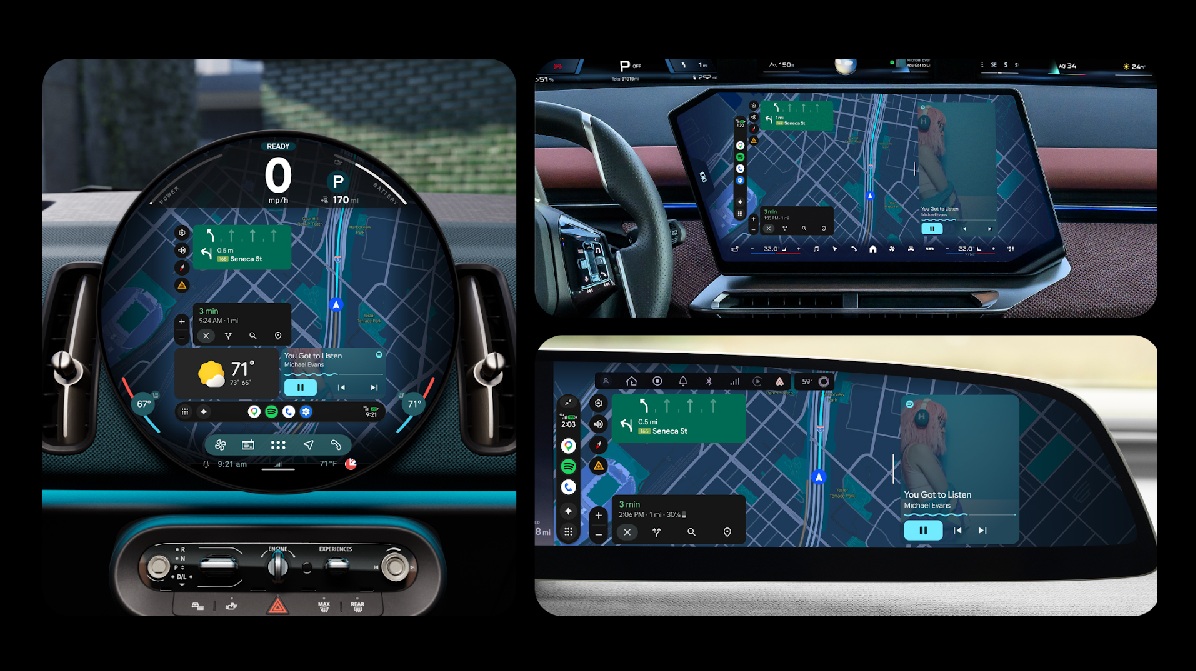
Google has unveiled one of the biggest upgrades ever for Android Auto, introducing a redesigned interface, smarter AI-powered features, immersive navigation tools, and enhanced entertainment options for drivers.
The latest update transforms the overall experience inside vehicles by bringing deeper integration between Android smartphones and modern car infotainment systems. The refreshed platform now features Google’s new Material 3 Expressive design language, delivering smoother animations, improved layouts, and more personalized controls.
One of the standout additions is the new “Immersive Navigation” experience in Google Maps. Drivers will now see advanced 3D maps, detailed lane guidance, real-time traffic visualization, and improved route awareness on larger vehicle displays. The feature is designed to make navigation more intuitive and visually engaging.
Google is also expanding entertainment capabilities inside cars. Android Auto will now support HD video streaming through YouTube while vehicles are parked, alongside Dolby Atmos spatial audio support for compatible systems. These upgrades aim to turn vehicle infotainment screens into richer multimedia hubs.
READ MORE: Petrol Price in Pakistan Reduced by Rs. 5 Per Litre — Check New Rates
Artificial intelligence is another major focus of the update. Google’s Gemini AI assistant is being integrated more deeply into Android Auto, allowing drivers to perform more natural voice interactions. Users will be able to reply to messages, place food orders, manage apps, and even ask vehicle-related questions using conversational commands.
The company is also introducing new widgets for quick access to weather updates, smart home controls, contacts, and other frequently used functions directly from the dashboard. Android Auto will additionally adapt better to different screen sizes and shapes, including panoramic and curved displays found in newer vehicles.
Google says the new Android Auto features will begin rolling out gradually to supported vehicles and devices throughout 2026. The update reflects the company’s broader push toward AI-driven automotive experiences and smarter connected mobility ecosystems.