
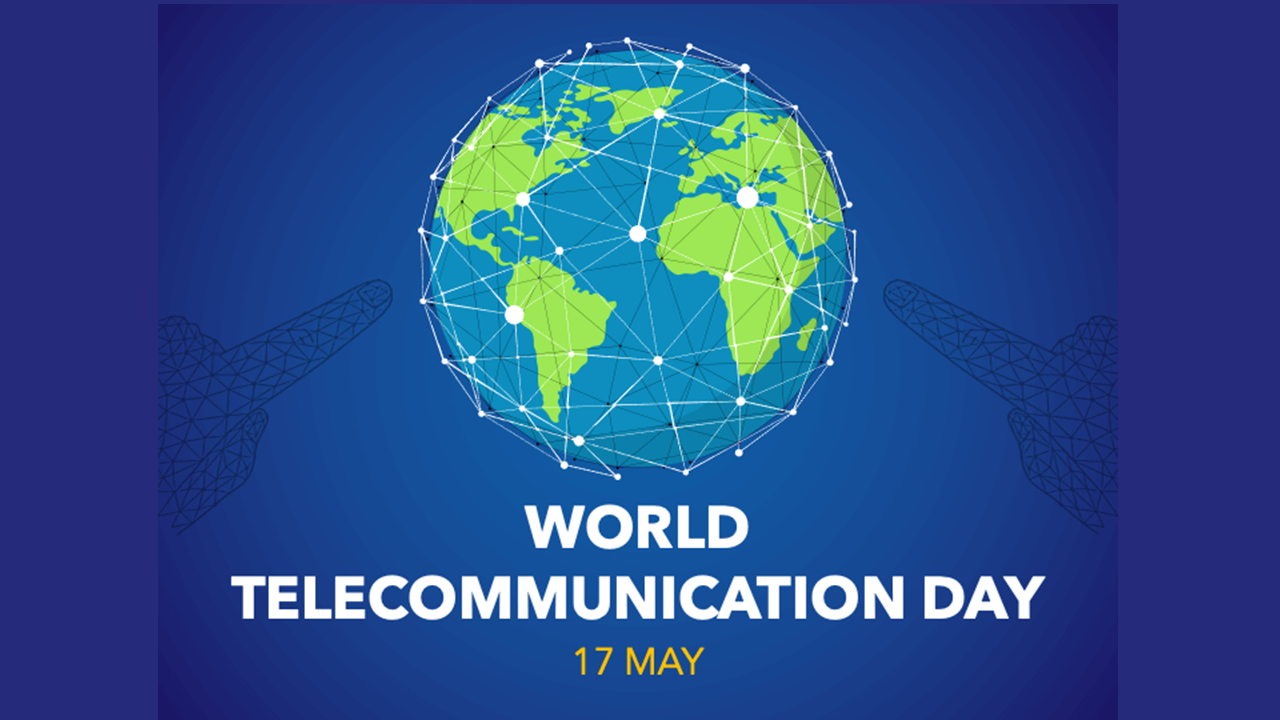
World Telecommunication and Information Society Day (WTISD), observed annually on May 17, highlights the progress and challenges in global connectivity. First celebrated in 1969 to mark the founding of the International Telecommunication Union (ITU) in 1865, the 2025 edition holds special significance as the ITU celebrates its 160th anniversary. From the telegraph to AI-driven digital networks, telecommunications have transformed how we live, work, and connect.
Today, telecommunications power everyday activities—from phone calls and GPS to internet access and emergency services—largely thanks to the ITU’s global standards and spectrum management. With over 13.7 billion mobile and IoT connections worldwide, mobile technologies now contribute 5.8% to global GDP, projected to reach $11 trillion by 2030.
Despite this progress, significant gaps remain. Of the world’s 8.22 billion people, 71% (5.8 billion) are unique mobile subscribers, and only 60% (4.7 billion) use mobile internet. Smartphone adoption has reached 80%, yet 20% still use basic phones. In Pakistan, telecom growth is evident with over 197 million mobile users and nearly 60% broadband penetration. The Pakistan Telecommunication Authority (PTA) is actively addressing digital inclusion, e-waste, and child safety, collaborating with global bodies like ITU, GSMA, UNESCO, and A4AI.
READ MORE: WhatsApp Rolls Out AI-Generated Profile Photos and Group Icons for iOS Users
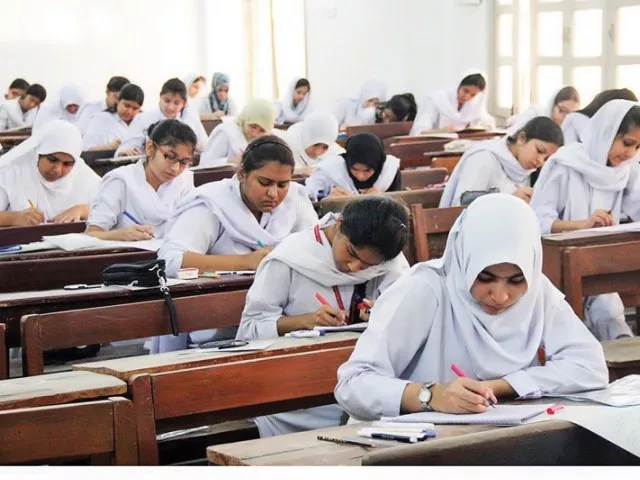
WTISD 2025’s central theme—closing the digital gender gap—underscores the urgency to ensure digital access is safe, inclusive, and empowering for all. Women remain significantly underrepresented online, with 189 million fewer women than men using the internet globally. In rural and marginalized areas, this gap is even wider, hindering access to education, jobs, and opportunities.
Governments can help close this divide by revising telecom policies to prioritize women’s access, leveraging Universal Service Funds for affordable devices and services, and launching digital literacy programs. Public-private partnerships and awareness campaigns are essential to change societal attitudes and empower marginalized communities.
E-waste is another growing concern. In 2022, 62 billion kg of e-waste was generated, but only 22.3% was properly recycled. Poor data collection, informal recycling, and weak legislation pose serious health and environmental risks. The ITU aims for 50% of countries to adopt e-waste laws, but only 42% have met this target. Solutions include incentivized manufacturer take-back programs, establishing model recycling plants, and public education on safe disposal.
As we advance into the era of 5G, IoT, and AI, the challenge isn’t just about access—it’s about meaningful inclusion. WTISD 2025 serves as a call to action. Real progress depends on bridging digital gaps across gender, geography, and income, and on creating a connected world that is safe, equitable, and empowering for everyone.