

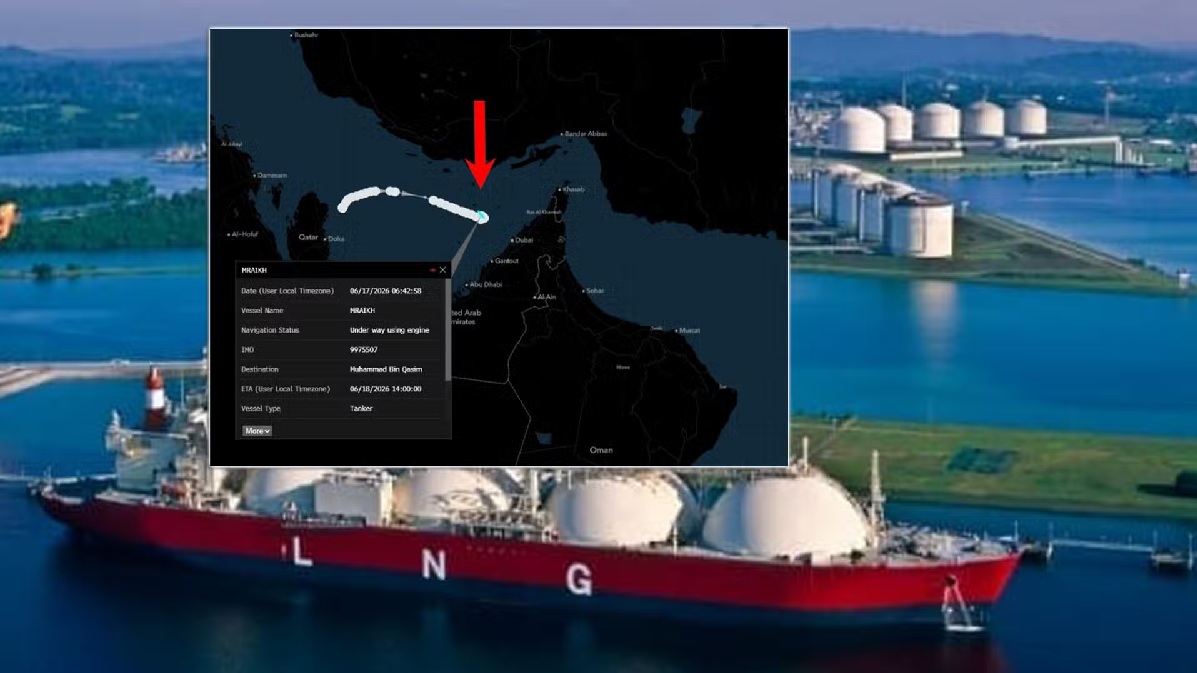
A liquefied natural gas (LNG) shipment has reportedly become the first post-conflict cargo to transit the Strait of Hormuz while heading toward Pakistan, marking a significant development in the country’s energy supply chain.
According to shipping data and industry tracking reports, the LNG tanker is currently crossing the strategically vital waterway after loading its cargo in the Gulf region. The vessel is expected to continue its journey toward Pakistan’s import terminals, likely Port Qasim or Karachi, which handle a major share of the country’s LNG and energy imports.
The movement of this cargo comes amid a fragile stabilization in maritime traffic through the Strait of Hormuz, which had faced serious disruptions earlier due to regional conflict. The strait is a critical global energy corridor, responsible for a large portion of oil and LNG shipments leaving the Gulf region.
Pakistan, which relies heavily on imported LNG to meet domestic energy demand, has been closely affected by earlier shipping interruptions. Previous disruptions forced the country to adjust its procurement strategy, including purchasing spot cargoes at higher international prices and relying on limited government-to-government arrangements for supply security.
READ MORE: Pakistan’s IT Exports Dip in May but $4.5 Billion Annual Target Still on Track
Recent reports indicate that LNG shipments from suppliers such as Qatar have gradually resumed under carefully coordinated transit arrangements, allowing a small number of vessels to safely pass through the strait. These developments are being seen as an early sign of normalization in energy flows, although shipping activity in the region remains cautious and below pre-conflict levels.
Energy analysts suggest that while the arrival of LNG cargoes is a positive signal for Pakistan’s energy security, the situation in the Strait of Hormuz remains sensitive, and any escalation could quickly disrupt supply chains again.
Overall, the passage of this LNG cargo highlights both the fragility and importance of maritime energy routes for Pakistan’s economy and its ongoing efforts to secure stable fuel supplies.